
Thursday, June 3, 2010

Monday, May 24, 2010

Wednesday, May 19, 2010

Thursday, May 13, 2010

Sunday, May 9, 2010
Tuesday, March 30, 2010

Monday, December 7, 2009
INFAMY

"Always will we remember the character of the onslaught against us. No matter how long it may take us to overcome this premeditated invasion, the American people in their righteous might will win through to absolute victory." full text
beginning of the attack. The explosion in the center is a torpedo
strike on the USS West Virginia
Tuesday, November 3, 2009
St. Martin de Porres
 DECEMBER 09, 1579 - NOVEMBER 03, 1639
The example of Martin’s life is ample evidence that we can strive for holiness and salvation as Christ Jesus has shown us: first, by loving God “with all your heart, with all your soul, and with all your mind; and second, by loving your neighbor as yourself.” When Martin had come to realize that Christ Jesus “suffered for us and that he carried our sins on his body to the cross, he would meditate with remarkable ardor and affection about Christ on the cross. He had an exceptional love for the great sacrament of the Eucharist and often spent long hours in prayer before the blessed sacrament. His desire was to receive the sacrament in Communion as often as he could. Saint Martin, always obedient and inspired by his divine teacher, dealt with his brothers and with that profound love which comes from pure faith and humility of spirit. He loved men and because he honestly looked on them as God’s children and as his own brothers and sisters. Such was his humility that he loved them even more than himself, and considered them to be better and more righteous than he was. He did not blame others for their shortcomings. Certain that he deserved more severe punishment for his sins than others did, he would overlook their worst offenses. He was tireless in his efforts to reform the criminal, and he would sit up with the sick to bring them comfort. For the poor he would provide food, clothing and medicine. He did all he could to care for poor farmhands, blacks, and mulattoes who were looked down upon as slaves, the dregs of society in their time. Common people responded by calling him, “Martin the charitable.” He excused the faults of others. He forgave the bitterest injuries, convinced that he deserved much severer punishments on account of his own sins. He tried with all his might to redeem the guilty; lovingly he comforted the sick; he provided food, clothing and medicine for the poor; he helped, as best he could, farm laborers and Negroes, as well as mulattoes, who were looked upon at that time as akin to slaves: thus he deserved to be called by the name the people gave him: ‘Martin of Charity.’ It is remarkable how even today his influence can still move us toward the things of heaven. Sad to say, not all of us understand these spiritual values as well as we should, not do we give them a proper place in our lives. Many of us, in fact, strongly attracted by sin, may look upon these values as of little moment, even something of a nuisance, or we ignore them altogether. It is deeply rewarding for men striving for salvation to follow in Christ’s footsteps and to obey God’s commandments. If only everyone could learn this lesson from the example that Martin gave us. - from a homily by Blessed Pope John XXIII given at the canonization of Saint Martin de Porres
Thursday, October 22, 2009
Tuesday, September 8, 2009


Saturday, August 29, 2009
Monday, July 20, 2009
The Eagle Has Landed
APOLLO 11
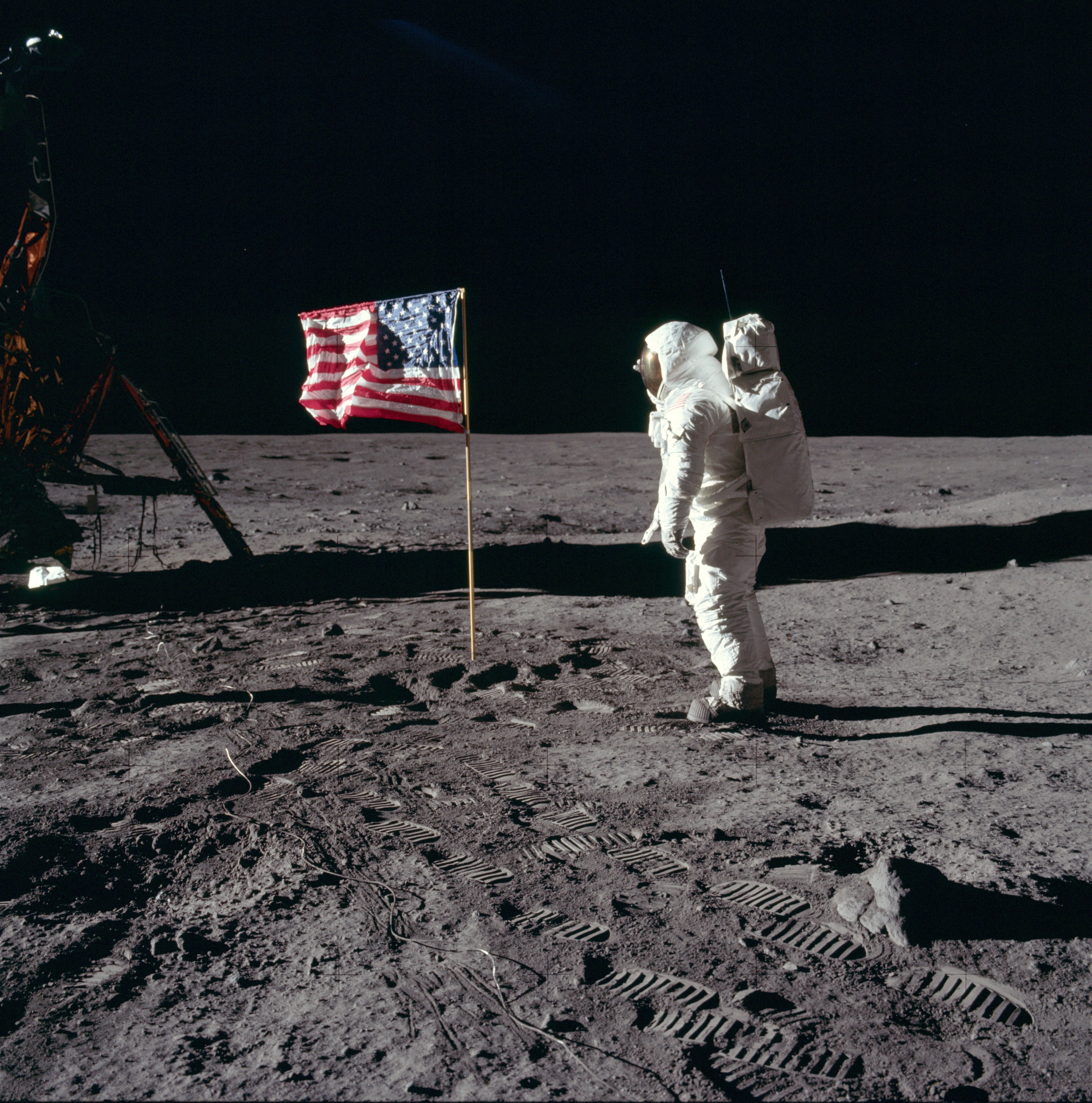
Lunar landing
July 20, 1969 20:17:40 UTC
Sea of Tranquility
0° 40' 26.69" N 23° 28' 22.69" E
(based on the IAU Mean Earth Polar Axis coordinate system)
"I believe that this nation should commit itself to achieving the goal, before this decade is out, of landing a man on the Moon and returning him safely to the Earth."
JFK at Rice University September 12, 1962
Lunar landing
July 20, 1969 20:17:40 UTC
Sea of Tranquility
0° 40' 26.69" N 23° 28' 22.69" E
(based on the IAU Mean Earth Polar Axis coordinate system)
"I believe that this nation should commit itself to achieving the goal, before this decade is out, of landing a man on the Moon and returning him safely to the Earth."
JFK at Rice University September 12, 1962
Friday, July 17, 2009
Monday, June 22, 2009
Tuesday, June 9, 2009
Monday, June 8, 2009
Saturday, May 30, 2009

Wednesday, May 6, 2009
Joy, beautiful spark of gods
Symphony No. 9 in D minor, Op. 125 "Choral"
Premiered on May 7, 1824 in the Kärntnertortheater in Vienna
The Third Movement
Premiered on May 7, 1824 in the Kärntnertortheater in Vienna
The Third Movement
Thursday, April 16, 2009

Happy Birthday!

16 April 1927 Marktl am Inn, Bavaria, Germany
Estas son las mananitas
que cantaba el rey David.
Hoy por ser dia de tu santo
te las cantamos a ti.
Despierta, mi bien, despierta;
mira que ya amaneci.
Ya los pajaritos cantan;
la luna ya se meti
Que linda est la manana
en que vengo a saludarte;
venimos todos con gusto
y plazer a felicitarte.
El dia en que tu naciste
Nacieron todas las flores
En la fila del bautizmo
cantaron los Ruiceores
Ya viene amaneciendo
Ya la luz del dia nos di
Levantate de manana
mira que ya amaneci
Si yo pudiera bajarte
las estrellas y un lucero
para poder demostrarte
lo mucho que yo te quiero
Con jazmines y flores
Este dia quiero acordar
Hoy por ser dia de tu santo
Te venimos a cantar.
The Obamanation of Desolation speaks at Georgetown
"Everyone who acknowledges me before others I will acknowledge before my heavenly Father. But whoever denies me before others, I will deny before my heavenly Father." -Matthew 10: 33
“His armed forces will rise up to desecrate the temple fortress and will abolish the daily sacrifice. Then they will set up the abomination that causes desolation.” - Daniel 11:31
Georgetown Says It Covered Over Name of Jesus to Comply With White House Request
Wednesday, April 15, 2009
By Edwin Mora
CNSNews.com) - Georgetown University says it covered over the monogram “IHS”--symbolizing the name of Jesus Christ—because it was inscribed on a pediment on the stage where President Obama spoke at the university on Tuesday and the White House had asked Georgetown to cover up all signs and symbols there. As of Wednesday afternoon, the “IHS” monogram that had previously adorned the stage at Georgetown’s Gaston Hall was still covered up--when the pediment where it had appeared was photographed by CNSNews.com.
“In coordinating the logistical arrangements for yesterday’s event, Georgetown honored the White House staff’s request to cover all of the Georgetown University signage and symbols behind Gaston Hall stage,” Julie Green Bataille, associate vice president for communications at Georgetown, told CNSNews.com. “The White House wanted a simple backdrop of flags and pipe and drape for the speech, consistent with what they’ve done for other policy speeches,” she added. “Frankly, the pipe and drape wasn’t high enough by itself to fully cover the IHS and cross above the GU seal and it seemed most respectful to have them covered so as not to be seen out of context.”
On Wednesday, CNSNews.com inspected the pediment embedded in the wall at the back of the stage in Gaston Hall, where Obama delivered his speech. The letters “IHS” were not to be found. They appeared to be shrouded with a triangle of black-painted plywood. Pictures of the wooden pediment prior to Obama’s speech show the letters “IHS" in gold. Many photos posted on the Internet of other events at Gaston Hall show the letters clearly. The White House did not respond to a request from CNSNews.com to comment on the covering up of Jesus’ name at Gaston Hall.
Georgetown, which is run by the Jesuit order, is one of the most prestigious Catholic institutions of higher education in the United States. Roman Catholics traditionally use “IHS” as an abbreviation for Jesus’ name. According to the Catholic Encyclopedia, “St. Ignatius of Loyola adopted the monogram in his seal as general of the Society of Jesus (1541) and thus became the emblem of his institute.” The Society of Jesus is the formal name for the Jesuits.
Although the monogram was covered over on the wooden pediment at the back of the Gaston Hall stage where it would have been directly above and behind President Obama as he spoke, the letters “IHS” are posted elsewhere around the hall approximately 26 times on shields representing different parts of the United States and the world. Obama did not mention the name of Jesus during his address. However, he did mention Christ’s Sermon on the Mount.
“There is a parable at the end of the Sermon on the Mount that tells a story of two men…‘the rain descended and the floods came, and the winds blew, and beat upon that house…it fell not: for it was founded upon a rock,’” Obama said.
“We cannot rebuild this economy on the same pile of sand,” he added.
“We must build our house upon a rock.”
source
“His armed forces will rise up to desecrate the temple fortress and will abolish the daily sacrifice. Then they will set up the abomination that causes desolation.” - Daniel 11:31
Georgetown Says It Covered Over Name of Jesus to Comply With White House Request
Wednesday, April 15, 2009
By Edwin Mora
CNSNews.com) - Georgetown University says it covered over the monogram “IHS”--symbolizing the name of Jesus Christ—because it was inscribed on a pediment on the stage where President Obama spoke at the university on Tuesday and the White House had asked Georgetown to cover up all signs and symbols there. As of Wednesday afternoon, the “IHS” monogram that had previously adorned the stage at Georgetown’s Gaston Hall was still covered up--when the pediment where it had appeared was photographed by CNSNews.com.
“In coordinating the logistical arrangements for yesterday’s event, Georgetown honored the White House staff’s request to cover all of the Georgetown University signage and symbols behind Gaston Hall stage,” Julie Green Bataille, associate vice president for communications at Georgetown, told CNSNews.com. “The White House wanted a simple backdrop of flags and pipe and drape for the speech, consistent with what they’ve done for other policy speeches,” she added. “Frankly, the pipe and drape wasn’t high enough by itself to fully cover the IHS and cross above the GU seal and it seemed most respectful to have them covered so as not to be seen out of context.”
On Wednesday, CNSNews.com inspected the pediment embedded in the wall at the back of the stage in Gaston Hall, where Obama delivered his speech. The letters “IHS” were not to be found. They appeared to be shrouded with a triangle of black-painted plywood. Pictures of the wooden pediment prior to Obama’s speech show the letters “IHS" in gold. Many photos posted on the Internet of other events at Gaston Hall show the letters clearly. The White House did not respond to a request from CNSNews.com to comment on the covering up of Jesus’ name at Gaston Hall.
Georgetown, which is run by the Jesuit order, is one of the most prestigious Catholic institutions of higher education in the United States. Roman Catholics traditionally use “IHS” as an abbreviation for Jesus’ name. According to the Catholic Encyclopedia, “St. Ignatius of Loyola adopted the monogram in his seal as general of the Society of Jesus (1541) and thus became the emblem of his institute.” The Society of Jesus is the formal name for the Jesuits.
Although the monogram was covered over on the wooden pediment at the back of the Gaston Hall stage where it would have been directly above and behind President Obama as he spoke, the letters “IHS” are posted elsewhere around the hall approximately 26 times on shields representing different parts of the United States and the world. Obama did not mention the name of Jesus during his address. However, he did mention Christ’s Sermon on the Mount.
“There is a parable at the end of the Sermon on the Mount that tells a story of two men…‘the rain descended and the floods came, and the winds blew, and beat upon that house…it fell not: for it was founded upon a rock,’” Obama said.
“We cannot rebuild this economy on the same pile of sand,” he added.
“We must build our house upon a rock.”
source
Sunday, April 12, 2009
URBI et ORBI EASTER 2009
URBI ET ORBI MESSAGE OF HIS HOLINESS POPE BENEDICT XVI
EASTER 2009
Dear Brothers and Sisters in Rome and throughout the world,
From the depths of my heart, I wish all of you a blessed Easter. To quote Saint Augustine, “Resurrectio Domini, spes nostra – the resurrection of the Lord is our hope” (Sermon 261:1). With these words, the great Bishop explained to the faithful that Jesus rose again so that we, though destined to die, should not despair, worrying that with death life is completely finished; Christ is risen to give us hope (cf. ibid.).
Indeed, one of the questions that most preoccupies men and women is this: what is there after death? To this mystery today’s solemnity allows us to respond that death does not have the last word, because Life will be victorious at the end. This certainty of ours is based not on simple human reasoning, but on a historical fact of faith: Jesus Christ, crucified and buried, is risen with his glorified body. Jesus is risen so that we too, believing in him, may have eternal life. This proclamation is at the heart of the Gospel message. As Saint Paul vigorously declares: “If Christ has not been raised, our preaching is in vain and your faith is in vain.” He goes on to say: “If for this life only we have hoped in Christ, we are of all men most to be pitied” (1 Cor 15:14,19). Ever since the dawn of Easter a new Spring of hope has filled the world; from that day forward our resurrection has begun, because Easter does not simply signal a moment in history, but the beginning of a new condition: Jesus is risen not because his memory remains alive in the hearts of his disciples, but because he himself lives in us, and in him we can already savour the joy of eternal life.
The resurrection, then, is not a theory, but a historical reality revealed by the man Jesus Christ by means of his “Passover”, his “passage”, that has opened a “new way” between heaven and earth (cf. Heb 10:20). It is neither a myth nor a dream, it is not a vision or a utopia, it is not a fairy tale, but it is a singular and unrepeatable event: Jesus of Nazareth, son of Mary, who at dusk on Friday was taken down from the Cross and buried, has victoriously left the tomb. In fact, at dawn on the first day after the Sabbath, Peter and John found the tomb empty. Mary Magdalene and the other women encountered the risen Jesus. On the way to Emmaus the two disciples recognized him at the breaking of the bread. The Risen One appeared to the Apostles that evening in the Upper Room and then to many other disciples in Galilee.
The proclamation of the Lord’s Resurrection lightens up the dark regions of the world in which we live. I am referring particularly to materialism and nihilism, to a vision of the world that is unable to move beyond what is scientifically verifiable, and retreats cheerlessly into a sense of emptiness which is thought to be the definitive destiny of human life. It is a fact that if Christ had not risen, the “emptiness” would be set to prevail. If we take away Christ and his resurrection, there is no escape for man, and every one of his hopes remains an illusion. Yet today is the day when the proclamation of the Lord’s resurrection vigorously bursts forth, and it is the answer to the recurring question of the sceptics, that we also find in the book of Ecclesiastes: “Is there a thing of which it is said, ‘See, this is new’?” (Ec 1:10). We answer, yes: on Easter morning, everything was renewed. “Mors et vita, duello conflixere mirando: dux vitae mortuus, regnat vivus – Death and life have come face to face in a tremendous duel: the Lord of life was dead, but now he lives triumphant.” This is what is new! A newness that changes the lives of those who accept it, as in the case of the saints. This, for example, is what happened to Saint Paul.
Many times, in the context of the Pauline year, we have had occasion to meditate on the experience of the great Apostle. Saul of Tarsus, the relentless persecutor ofChristians, encountered the risen Christ on the road to Damascus, and was “conquered” by him. The rest we know. In Paul there occurred what he would later write about to the Christians of Corinth: “If anyone is in Christ, he is a new creation; the old has passed away, behold, the new has come” (2 Cor 5:17). Let us look at this great evangelizer, who with bold enthusiasm and apostolic zeal brought the Gospel to many different peoples in the world of that time. Let his teaching and example inspire us to go in search of the Lord Jesus. Let them encourage us to trust him, because that sense of emptiness, which tends to intoxicate humanity, has been overcome by the light and the hope that emanate from the resurrection. The words of the Psalm have truly been fulfilled: “Darkness is not darkness for you, and the night is as clear as the day” (Ps 139 [138]:12). It is no longer emptiness that envelops all things, but the loving presence of God. The very reign of death has been set free, because the Word of life has even reached the “underworld”, carried by the breath of the Spirit (v. 8).
If it is true that death no longer has power over man and over the world, there still remain very many, in fact too many signs of its former dominion. Even if through Easter, Christ has destroyed the root of evil, he still wants the assistance of men and women in every time and place who help him to affirm his victory using his own weapons: the weapons of justice and truth, mercy, forgiveness and love. This is the message which, during my recent Apostolic Visit to Cameroon and Angola, I wanted to convey to the entire African continent, where I was welcomed with such great enthusiasm and readiness to listen. Africa suffers disproportionately from the cruel and unending conflicts, often forgotten, that are causing so much bloodshed and destruction in several of her nations, and from the growing number of her sons and daughters who fall prey to hunger, poverty and disease. I shall repeat the same message emphatically in the Holy Land, to which I shall have the joy of travelling in a few weeks from now. Reconciliation – difficult, but indispensable – is a precondition for a future of overall security and peaceful coexistence, and it can only be achieved through renewed, persevering and sincere efforts to resolve the Israeli-Palestinian conflict. My thoughts move outwards from the Holy Land to neighbouring countries, to the Middle East, to the whole world. At a time of world food shortage, of financial turmoil, of old and new forms of poverty, of disturbing climate change, of violence and deprivation which force many to leave their homelands in search of a less precarious form of existence, of the ever-present threat of terrorism, of growing fears over the future, it is urgent to rediscover grounds for hope. Let no one draw back from this peaceful battle that has been launched by Christ’s Resurrection. For as I said earlier, Christ is looking for men and women who will help him to affirm his victory using his own weapons: the weapons of justice and truth, mercy, forgiveness and love.
Resurrectio Domini, spes nostra! The resurrection of Christ is our hope! This the Church proclaims today with joy. She announces the hope that is now firm and invincible because God has raised Jesus Christ from the dead. She communicates the hope that she carries in her heart and wishes to share with all people in every place, especially where Christians suffer persecution because of their faith and their commitment to justice and peace. She invokes the hope that can call forth the courage to do good, even when it costs, especially when it costs. Today the Church sings “the day that the Lord has made”, and she summons people to joy. Today the Church calls in prayer upon Mary, Star of Hope, asking her to guide humanity towards the safe haven of salvation which is the heart of Christ, the paschal Victim, the Lamb who has “redeemed the world”, the Innocent one who has “reconciled us sinners with the Father”. To him, our victorious King, to him who is crucified and risen, we sing out with joy our Alleluia!
© Copyright 2009 - Libreria Editrice Vaticana
source
EASTER 2009
Dear Brothers and Sisters in Rome and throughout the world,
From the depths of my heart, I wish all of you a blessed Easter. To quote Saint Augustine, “Resurrectio Domini, spes nostra – the resurrection of the Lord is our hope” (Sermon 261:1). With these words, the great Bishop explained to the faithful that Jesus rose again so that we, though destined to die, should not despair, worrying that with death life is completely finished; Christ is risen to give us hope (cf. ibid.).
Indeed, one of the questions that most preoccupies men and women is this: what is there after death? To this mystery today’s solemnity allows us to respond that death does not have the last word, because Life will be victorious at the end. This certainty of ours is based not on simple human reasoning, but on a historical fact of faith: Jesus Christ, crucified and buried, is risen with his glorified body. Jesus is risen so that we too, believing in him, may have eternal life. This proclamation is at the heart of the Gospel message. As Saint Paul vigorously declares: “If Christ has not been raised, our preaching is in vain and your faith is in vain.” He goes on to say: “If for this life only we have hoped in Christ, we are of all men most to be pitied” (1 Cor 15:14,19). Ever since the dawn of Easter a new Spring of hope has filled the world; from that day forward our resurrection has begun, because Easter does not simply signal a moment in history, but the beginning of a new condition: Jesus is risen not because his memory remains alive in the hearts of his disciples, but because he himself lives in us, and in him we can already savour the joy of eternal life.
The resurrection, then, is not a theory, but a historical reality revealed by the man Jesus Christ by means of his “Passover”, his “passage”, that has opened a “new way” between heaven and earth (cf. Heb 10:20). It is neither a myth nor a dream, it is not a vision or a utopia, it is not a fairy tale, but it is a singular and unrepeatable event: Jesus of Nazareth, son of Mary, who at dusk on Friday was taken down from the Cross and buried, has victoriously left the tomb. In fact, at dawn on the first day after the Sabbath, Peter and John found the tomb empty. Mary Magdalene and the other women encountered the risen Jesus. On the way to Emmaus the two disciples recognized him at the breaking of the bread. The Risen One appeared to the Apostles that evening in the Upper Room and then to many other disciples in Galilee.
The proclamation of the Lord’s Resurrection lightens up the dark regions of the world in which we live. I am referring particularly to materialism and nihilism, to a vision of the world that is unable to move beyond what is scientifically verifiable, and retreats cheerlessly into a sense of emptiness which is thought to be the definitive destiny of human life. It is a fact that if Christ had not risen, the “emptiness” would be set to prevail. If we take away Christ and his resurrection, there is no escape for man, and every one of his hopes remains an illusion. Yet today is the day when the proclamation of the Lord’s resurrection vigorously bursts forth, and it is the answer to the recurring question of the sceptics, that we also find in the book of Ecclesiastes: “Is there a thing of which it is said, ‘See, this is new’?” (Ec 1:10). We answer, yes: on Easter morning, everything was renewed. “Mors et vita, duello conflixere mirando: dux vitae mortuus, regnat vivus – Death and life have come face to face in a tremendous duel: the Lord of life was dead, but now he lives triumphant.” This is what is new! A newness that changes the lives of those who accept it, as in the case of the saints. This, for example, is what happened to Saint Paul.
Many times, in the context of the Pauline year, we have had occasion to meditate on the experience of the great Apostle. Saul of Tarsus, the relentless persecutor ofChristians, encountered the risen Christ on the road to Damascus, and was “conquered” by him. The rest we know. In Paul there occurred what he would later write about to the Christians of Corinth: “If anyone is in Christ, he is a new creation; the old has passed away, behold, the new has come” (2 Cor 5:17). Let us look at this great evangelizer, who with bold enthusiasm and apostolic zeal brought the Gospel to many different peoples in the world of that time. Let his teaching and example inspire us to go in search of the Lord Jesus. Let them encourage us to trust him, because that sense of emptiness, which tends to intoxicate humanity, has been overcome by the light and the hope that emanate from the resurrection. The words of the Psalm have truly been fulfilled: “Darkness is not darkness for you, and the night is as clear as the day” (Ps 139 [138]:12). It is no longer emptiness that envelops all things, but the loving presence of God. The very reign of death has been set free, because the Word of life has even reached the “underworld”, carried by the breath of the Spirit (v. 8).
If it is true that death no longer has power over man and over the world, there still remain very many, in fact too many signs of its former dominion. Even if through Easter, Christ has destroyed the root of evil, he still wants the assistance of men and women in every time and place who help him to affirm his victory using his own weapons: the weapons of justice and truth, mercy, forgiveness and love. This is the message which, during my recent Apostolic Visit to Cameroon and Angola, I wanted to convey to the entire African continent, where I was welcomed with such great enthusiasm and readiness to listen. Africa suffers disproportionately from the cruel and unending conflicts, often forgotten, that are causing so much bloodshed and destruction in several of her nations, and from the growing number of her sons and daughters who fall prey to hunger, poverty and disease. I shall repeat the same message emphatically in the Holy Land, to which I shall have the joy of travelling in a few weeks from now. Reconciliation – difficult, but indispensable – is a precondition for a future of overall security and peaceful coexistence, and it can only be achieved through renewed, persevering and sincere efforts to resolve the Israeli-Palestinian conflict. My thoughts move outwards from the Holy Land to neighbouring countries, to the Middle East, to the whole world. At a time of world food shortage, of financial turmoil, of old and new forms of poverty, of disturbing climate change, of violence and deprivation which force many to leave their homelands in search of a less precarious form of existence, of the ever-present threat of terrorism, of growing fears over the future, it is urgent to rediscover grounds for hope. Let no one draw back from this peaceful battle that has been launched by Christ’s Resurrection. For as I said earlier, Christ is looking for men and women who will help him to affirm his victory using his own weapons: the weapons of justice and truth, mercy, forgiveness and love.
Resurrectio Domini, spes nostra! The resurrection of Christ is our hope! This the Church proclaims today with joy. She announces the hope that is now firm and invincible because God has raised Jesus Christ from the dead. She communicates the hope that she carries in her heart and wishes to share with all people in every place, especially where Christians suffer persecution because of their faith and their commitment to justice and peace. She invokes the hope that can call forth the courage to do good, even when it costs, especially when it costs. Today the Church sings “the day that the Lord has made”, and she summons people to joy. Today the Church calls in prayer upon Mary, Star of Hope, asking her to guide humanity towards the safe haven of salvation which is the heart of Christ, the paschal Victim, the Lamb who has “redeemed the world”, the Innocent one who has “reconciled us sinners with the Father”. To him, our victorious King, to him who is crucified and risen, we sing out with joy our Alleluia!
© Copyright 2009 - Libreria Editrice Vaticana
source
Saturday, April 11, 2009
April 12, 1961
 Yuri Gagarin became the first human to travel into space, launching to orbit aboard the Vostok 3KA-2
"The Earth is blue. ... How wonderful. It is amazing." —Gagarin, to ground control
"Gagarin flew into space, but didn't see any God there" -Nikita Khrushchev's speaking at the plenum of the Central Committee of the CPSU
Friday, April 10, 2009
NObama bows to king.
I'd say more like a genuflection...notice his lower body movement...notice a slight bend of the knee?
Thursday, April 9, 2009
APRIL 9, 1959
 The Mercury Seven, selected by NASA April 9, 2009.
(L to R) Cooper, Schirra, Shepard, Grissom, Glenn, Slayton and Carpenter
OBSTINANCE at NOTRE DAME
Leaked: ND Prez Comment on USCCB Document Prohibiting Honoring Pro-Abortion Politicians
By Kathleen Gilbert
NOTRE DAME, Indiana, April 8, 2009 (LifeSiteNews.com) - LifeSiteNews.com has obtained a copy of University of Notre Dame President Fr. John Jenkins' commentary on the U.S. Bishops Conference (USCCB) document, "Catholics in the Political Life," which was sent to Notre Dame's Board of Trustees at the beginning of this month. In the commentary Jenkins explains how he believes that the university's invitation of President Obama to be this year's commencement speaker and receive an honorary law degree is in keeping with the "letter and the spirit" of the recommendations included in the USCCB document.
The USCCB issued "Catholics in Political Life" in 2004. The document directs Catholic schools not to honor pro-abortion politicians. Many of the 29 bishops who have so far spoken out against the scandal, including Notre Dame's Bishop John D'Arcy and USCCB President Cardinal Francis George, have indicated that the school's invitation to President Obama to speak at commencement and receive an honorary law degree was in violation of the bishops' directive. (To view the USCCB document, go to: http://www.usccb.org/bishops/catholicsinpoliticallife.shtml)
The following is the complete text of Jenkins' commentary:
In June 2004, the United States Conference of Catholic Bishops issued a statement, "Catholics in Political Life." A number of people have quoted this document with regard to Notre Dame's invitation to President Obama to be its Commencement Speaker and receive an honorary degree. Our interpretation of this document is different from the one that has been imposed by those criticizing us, and I wanted to explain our understanding.
The 2004 document was clearly adopted by the Bishops as provisional. As the document says, "[h]aving received an extensive report from the Task Force on Catholic Bishops and Catholic Politicians, and looking forward to the full report, we highlight several points from the interim report that suggest some directions for our efforts...." Nevertheless, despite its provisional character, this document has been used by all the people at Notre Dame who recommend speakers for commencement or others for honorary degrees since its publication. We have tried to follow both the letter and the spirit of its recommendations.
Two key sentences of the document have been frequently quoted regarding the invitation to President Obama:
"Catholic institutions should not honor those who act in defiance of our fundamental moral principles. They should not be given awards, honors or platforms which would suggest support for their actions."
Because the title of the document is "Catholics in Political Life", we understood this to refer to honoring Catholics whose actions are not in accord with our moral principles. This interpretation was supported by canon lawyers we consulted, who advised us that, by definition, only Catholics who implicitly recognize the authority of Church teaching can act in "defiance" of it. Moreover, fellow university presidents have told me that their bishops have told them that in fact it is only Catholic politicians who are referred to in this document.
In addition, regardless of how one interprets the first sentence, the second is also important. It reads: "They should not be given awards, honors or platforms which would suggest support for their actions. [My italics]" In every statement I have made about the invitation of President Obama and in every statement I will make, I express our disagreement with him on issues surrounding the protection of life, such as abortion and embryonic stem cell research. If we repeatedly and clearly state that we do not support the President on these issues, we cannot be understood to "suggest support".
Finally, the document states that "we need to do more to persuade all people that human life is precious and human dignity must be defended. This requires more effective dialogue and engagement with all public officials...." However misguided some might consider our actions, it is in the spirit of providing a basis for dialogue that we invited President Obama.
On May 17 we will welcome the ninth President who will receive an honorary degree from Notre Dame. It will be an important opportunity to bring the leader of our nation to Notre Dame, and, I hope, a joyful day for our graduates and their families.
Fr. John Jenkins, C.S.C.
source
By Kathleen Gilbert
NOTRE DAME, Indiana, April 8, 2009 (LifeSiteNews.com) - LifeSiteNews.com has obtained a copy of University of Notre Dame President Fr. John Jenkins' commentary on the U.S. Bishops Conference (USCCB) document, "Catholics in the Political Life," which was sent to Notre Dame's Board of Trustees at the beginning of this month. In the commentary Jenkins explains how he believes that the university's invitation of President Obama to be this year's commencement speaker and receive an honorary law degree is in keeping with the "letter and the spirit" of the recommendations included in the USCCB document.
The USCCB issued "Catholics in Political Life" in 2004. The document directs Catholic schools not to honor pro-abortion politicians. Many of the 29 bishops who have so far spoken out against the scandal, including Notre Dame's Bishop John D'Arcy and USCCB President Cardinal Francis George, have indicated that the school's invitation to President Obama to speak at commencement and receive an honorary law degree was in violation of the bishops' directive. (To view the USCCB document, go to: http://www.usccb.org/bishops/catholicsinpoliticallife.shtml)
The following is the complete text of Jenkins' commentary:
In June 2004, the United States Conference of Catholic Bishops issued a statement, "Catholics in Political Life." A number of people have quoted this document with regard to Notre Dame's invitation to President Obama to be its Commencement Speaker and receive an honorary degree. Our interpretation of this document is different from the one that has been imposed by those criticizing us, and I wanted to explain our understanding.
The 2004 document was clearly adopted by the Bishops as provisional. As the document says, "[h]aving received an extensive report from the Task Force on Catholic Bishops and Catholic Politicians, and looking forward to the full report, we highlight several points from the interim report that suggest some directions for our efforts...." Nevertheless, despite its provisional character, this document has been used by all the people at Notre Dame who recommend speakers for commencement or others for honorary degrees since its publication. We have tried to follow both the letter and the spirit of its recommendations.
Two key sentences of the document have been frequently quoted regarding the invitation to President Obama:
"Catholic institutions should not honor those who act in defiance of our fundamental moral principles. They should not be given awards, honors or platforms which would suggest support for their actions."
Because the title of the document is "Catholics in Political Life", we understood this to refer to honoring Catholics whose actions are not in accord with our moral principles. This interpretation was supported by canon lawyers we consulted, who advised us that, by definition, only Catholics who implicitly recognize the authority of Church teaching can act in "defiance" of it. Moreover, fellow university presidents have told me that their bishops have told them that in fact it is only Catholic politicians who are referred to in this document.
In addition, regardless of how one interprets the first sentence, the second is also important. It reads: "They should not be given awards, honors or platforms which would suggest support for their actions. [My italics]" In every statement I have made about the invitation of President Obama and in every statement I will make, I express our disagreement with him on issues surrounding the protection of life, such as abortion and embryonic stem cell research. If we repeatedly and clearly state that we do not support the President on these issues, we cannot be understood to "suggest support".
Finally, the document states that "we need to do more to persuade all people that human life is precious and human dignity must be defended. This requires more effective dialogue and engagement with all public officials...." However misguided some might consider our actions, it is in the spirit of providing a basis for dialogue that we invited President Obama.
On May 17 we will welcome the ninth President who will receive an honorary degree from Notre Dame. It will be an important opportunity to bring the leader of our nation to Notre Dame, and, I hope, a joyful day for our graduates and their families.
Fr. John Jenkins, C.S.C.
source
NObama and the End of Christian America
Obama: "We Do Not Consider Ourselves a Christian Nation"
By Kathleen Gilbert and John-Henry Westen
ANKARA, Turkey, April 8, 2009 (LifeSiteNews.com) - Speaking to a Turkish press conference Monday as part of a tour to boost U.S. relations with Muslim countries, President Obama sparked controversy by dismissing the notion that America considers itself Christian in nature - unlike 62% of Americans in a recent Newsweek survey.
"Although ... we have a very large Christian population, we do not consider ourselves a Christian nation, or a Jewish nation, or a Muslim nation," said Obama. "We consider ourselves a nation of citizens who are bound by ideals and a set of values."
The statement recalled previous remarks to the Christian Broadcasting Network in 2007, when Obama affirmed that "whatever we once were, we're no longer just a Christian nation."
The Internet immediately buzzed with feedback and reflection on the President's statements. Just prior to the press conference, Newsweek had stirred the waters with an article entitled "The End of Christian America," revealing 2009 American Religious Identification Survey data showing a decline in religious values in the U.S. In that survey, 62 percent of respondents said they considered the U.S. a Christian nation.
Conservative leaders questioned Obama's assessment of American self-identity, citing the U.S. Founding Fathers and presidents throughout the country's history who affirmed the country's Christian foundation.
"I think he [Obama] was using the editorial 'we' there. I don't know who he's talking to," remarked Dr. Timothy O'Donnell, president of Christendom College and professor of history, in an interview with LifeSiteNews.com (LSN) today on the issue.
While it is clear America was not instituted as an explicitly Christian nation, said O'Donnell, "it's an inconvertible fact of history that the overwhelming population of people who were involved in the drafting of the constitution ... came out of the tradition of Western Christian civilization."
"I think there's a strong body of Jews, Christians, certainly Evangelicals that would find such a statement to be very offensive," he said.
"With the greatest respect for the office of the presidency, many of us are both frightened and befuddled by this combo of bowing to the waist to the king of Saudi Arabia, and then declaring that this is not a Christian nation," remarked Rabbi Yehuda Levin, the Special Emissary to Israel for The Union of Orthodox Rabbis of the U.S. and Canada and The Rabbinical Alliance of America, in an interview with LSN today.
"I would say that most of us understand that this is a - certainly, certainly was at the founding, and for hundreds of years, was a de facto Christian nation," said Levin.
"What is the idea that binds us together?" he asked. "Respect for life and family values, respect for religious values that derive from a God who gave us Holy Writ. If Obama wants to discuss theology, then he should answer some more questions on this subject, because he is scaring a lot of people." source
By Kathleen Gilbert and John-Henry Westen
ANKARA, Turkey, April 8, 2009 (LifeSiteNews.com) - Speaking to a Turkish press conference Monday as part of a tour to boost U.S. relations with Muslim countries, President Obama sparked controversy by dismissing the notion that America considers itself Christian in nature - unlike 62% of Americans in a recent Newsweek survey.
"Although ... we have a very large Christian population, we do not consider ourselves a Christian nation, or a Jewish nation, or a Muslim nation," said Obama. "We consider ourselves a nation of citizens who are bound by ideals and a set of values."
The statement recalled previous remarks to the Christian Broadcasting Network in 2007, when Obama affirmed that "whatever we once were, we're no longer just a Christian nation."
The Internet immediately buzzed with feedback and reflection on the President's statements. Just prior to the press conference, Newsweek had stirred the waters with an article entitled "The End of Christian America," revealing 2009 American Religious Identification Survey data showing a decline in religious values in the U.S. In that survey, 62 percent of respondents said they considered the U.S. a Christian nation.
Conservative leaders questioned Obama's assessment of American self-identity, citing the U.S. Founding Fathers and presidents throughout the country's history who affirmed the country's Christian foundation.
"I think he [Obama] was using the editorial 'we' there. I don't know who he's talking to," remarked Dr. Timothy O'Donnell, president of Christendom College and professor of history, in an interview with LifeSiteNews.com (LSN) today on the issue.
While it is clear America was not instituted as an explicitly Christian nation, said O'Donnell, "it's an inconvertible fact of history that the overwhelming population of people who were involved in the drafting of the constitution ... came out of the tradition of Western Christian civilization."
"I think there's a strong body of Jews, Christians, certainly Evangelicals that would find such a statement to be very offensive," he said.
"With the greatest respect for the office of the presidency, many of us are both frightened and befuddled by this combo of bowing to the waist to the king of Saudi Arabia, and then declaring that this is not a Christian nation," remarked Rabbi Yehuda Levin, the Special Emissary to Israel for The Union of Orthodox Rabbis of the U.S. and Canada and The Rabbinical Alliance of America, in an interview with LSN today.
"I would say that most of us understand that this is a - certainly, certainly was at the founding, and for hundreds of years, was a de facto Christian nation," said Levin.
"What is the idea that binds us together?" he asked. "Respect for life and family values, respect for religious values that derive from a God who gave us Holy Writ. If Obama wants to discuss theology, then he should answer some more questions on this subject, because he is scaring a lot of people." source
Tuesday, April 7, 2009
Saturday, April 4, 2009
Hugh Ramopolo Masekela (b. April 04, 1939)
.jpg) Recorded the best instrumental song ever...Grazin in the Grass...earworm in the sidebar.
Recorded the best instrumental song ever...Grazin in the Grass...earworm in the sidebar.
Subscribe to:
Posts (Atom)